Implant Mismatch: Aligning Titanium Bar and Plate Grades
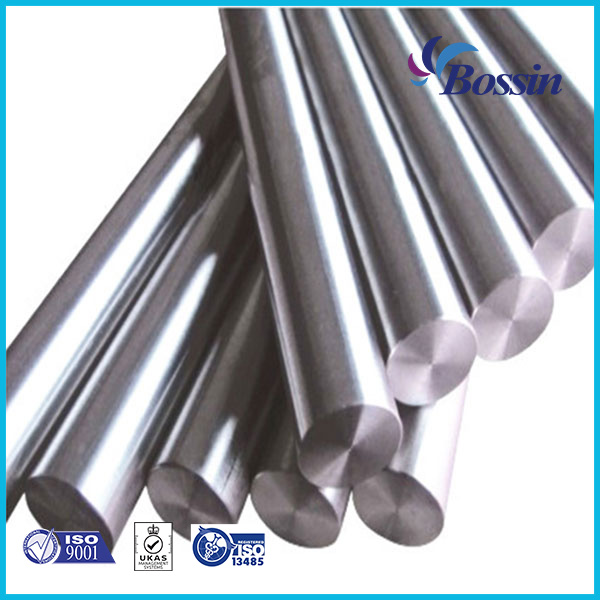
Short answer: a grade mismatch between a Medical Titanium Bar and a medical titanium plate is resolved by checking three things on every line item — the grade, the standard the certificate cites, and whether that grade exists in that product form. Commercially pure grades GR1, GR2, GR3 and GR4 pair with ASTM F67 and ISO 5832-2. Alloy grades GR5 ELI, Ti6Al4V ELI and GR23 pair with ASTM F136 and ISO 5832-3. GR3 is listed among the Medical Titanium Bar grades but not among the medical titanium plate grades, so a drawing that pairs a GR3 bar with a GR3 plate has no compliant plate source in the medical plate range.

The Problem: One Grade Name, Two Different Materials
An implant programme can reach the machining stage with two certificates that look consistent and are not. The purchase order names the same grade for a Medical Titanium Bar and a medical titanium plate. Both suppliers issue certificates that quote that grade. The mismatch only becomes visible when the incoming inspection plan has to state which specification the material was actually qualified against — and that statement can no longer be written the way the drawing assumed.
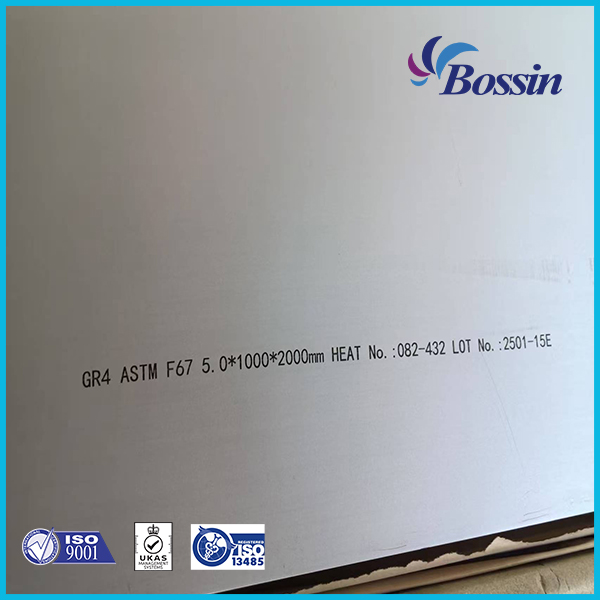
A grade name is shorthand. ASTM F67 and ISO 5832-2 describe unalloyed titanium for surgical implants. ASTM F136 covers the wrought Ti-6Al-4V ELI alloy for surgical implants, and ISO 5832-3 is the ISO counterpart for wrought Ti-6Al-4V alloy for implants. A plate certificate that cites ASTM F67 while the drawing calls for GR5 ELI is therefore not a naming inconsistency. It means the plate was qualified against a commercially pure titanium specification rather than an alloy specification.
A second and quieter mismatch comes from availability. GR3 appears in the medical titanium bar grade range but not in the medical titanium plate grade range. Any drawing that pairs a GR3 bar with a GR3 plate carries a plate requirement that the medical plate range does not cover. The plate is then quoted in GR4, and the project moves into machining with two different metallurgical bases behind one assembly drawing.
A third variant is a mixed alloy label: bar delivered as GR23, plate delivered as Ti6Al4V ELI. Both are legitimate on their own and both appear in the medical bar and medical plate grade lists, but without a signed equivalence record the device file contains two material designations for what the design intended as one.
Why Grade Alignment Became a Procurement Problem
Medical titanium demand is concentrated in bar and rod forms. In 2025, titanium bar and rod held the largest product share of the medical titanium component market at 52.4%, and the medical segment is the fastest-growing application in the titanium metal value chain at a 6.15% CAGR through 2031, according to the MarketsandMarkets synthesis published through Hontitan Analysis in 2026.
Supply is equally concentrated. China controls approximately 75% of global titanium metal production, which means implant manufacturers frequently buy bar and plate from different mills, different product lines, or different points in a single mill. Grade normalisation therefore stops being a metallurgy question and becomes a document-control question: two suppliers can both be technically compliant and still hand over two materials that cannot be used interchangeably.
Regulatory documentation adds a second layer. The FDA recognises ASTM F67-24 as the current specification for unalloyed titanium for surgical implant applications, and FDA recognition of ASTM F67-13 has been superseded, with the transition dated 22 December 2025. On the ISO side, ISO 5832-2:2018 specifies the characteristics of, and corresponding test methods for, unalloyed titanium used in the manufacture of surgical implants. A certificate citing an older edition, or a standard that does not match the stated grade, is a documentation finding that buyers have to resolve before the material can enter a device file.
The Grade Families and the Standards That Govern Them
The fastest way to end a mismatch is to stop reading grade names in isolation and classify each line item into a grade family. The commercially pure family covers GR1, GR2, GR3 and GR4. The alloy family covers GR5 ELI, Ti6Al4V ELI and GR23. The family, not the product form, decides which standard can legally appear on the certificate.
| Grade | Family | Governing standard | Medical Titanium Bar | Medical titanium plate |
|---|---|---|---|---|
| GR1 | Commercially pure | ASTM F67 / ISO 5832-2 | Listed | Listed |
| GR2 | Commercially pure | ASTM F67 / ISO 5832-2 | Listed | Listed |
| GR3 | Commercially pure | ASTM F67 / ISO 5832-2 | Listed | Not listed |
| GR4 | Commercially pure | ASTM F67 / ISO 5832-2 | Listed | Listed |
| GR5 ELI | Ti-6Al-4V extra low interstitial | ASTM F136 / ISO 5832-3 | Listed | Listed |
| Ti6Al4V ELI | Ti-6Al-4V extra low interstitial | ASTM F136 / ISO 5832-3 | Listed | Listed |
| GR23 | Ti-6Al-4V extra low interstitial | ASTM F136 / ISO 5832-3 | Listed | Listed |
Availability columns reflect the published BOSSIN medical bar and medical plate grade ranges. The bar range is GR1, GR2, GR3, GR4, GR5 ELI, Ti 6AL4V ELI and GR23. The medical plate range is GR1, GR2, GR4, GR5 ELI, Ti 6AL4V ELI and GR23.
Reading the commercially pure grades correctly
GR1 through GR4 differ mainly in interstitial content, which sets the balance between strength and formability. GR1 is the lowest-strength, most formable option in the group and is chosen where ductility matters; GR4 is the highest-strength commercially pure grade in the same list and is chosen where the part needs more load capacity without moving to an alloy. Because the gap between GR2 and GR4 is a property gap, not a cosmetic one, swapping them to solve a supply problem is a design change and should be documented as one.
Reading the alloy designations correctly
GR5 ELI, Ti6Al4V ELI and GR23 all sit inside the same extra-low-interstitial Ti-6Al-4V family and all appear in both the bar and plate ranges. That overlap is convenient but not self-documenting. A buyer can legitimately receive bar marked GR23 and plate marked Ti6Al4V ELI in the same order, but the assembly should carry one equivalence record that names ASTM F136 and ISO 5832-3 as the governing specifications for both forms, so an auditor reading the device file does not have to reconstruct the reasoning.
Four Mismatch Patterns and How Each Is Resolved
Most grade mismatches fall into four repeatable patterns. Naming the pattern is usually enough to decide who has to act: the supplier, the design owner, or the quality function.
| Pattern | What the documents show | Resolution |
|---|---|---|
| Standard–grade mismatch | Alloy grade such as GR5 ELI on a certificate that cites ASTM F67 or ISO 5832-2 | Reject for the alloy drawing. Request a certificate citing ASTM F136 or ISO 5832-3 for the same grade. |
| Form-availability mismatch | Drawing requires GR3 bar and GR3 plate; the plate is quoted in GR4 | Design decision required: move both components to a grade listed in both ranges (GR2 or GR4), or re-qualify the plate. |
| Alloy label mismatch | Bar labelled GR23, plate labelled Ti6Al4V ELI on the same assembly | Issue one equivalence record citing ASTM F136 and ISO 5832-3 for both forms. |
| Specification-level substitution | Plate certified to ASTM B265 rather than a medical plate specification | Confirm the medical grade and medical standard on the certificate before acceptance; the general-purpose plate range also includes grades outside the medical list. |
The fourth pattern deserves emphasis because it is easy to miss. BOSSIN's general-purpose Titanium plate range is wider than the medical plate range, covering GR1, GR2, GR3, GR4, GR5, GR5 ELI, GR7, GR9, GR12 and GR23 against ASTM B265, ASTM F136, ISO 5832-3, ASTM F67, ISO 5832-2, AMS 4911, AMS 4905 and AMS 4907. A plate that is perfectly correct as industrial titanium can therefore be the wrong plate for a bone plate component if the medical standard and the medical grade are not both stated.
Step-by-Step: Aligning Bar and Plate Before Machining
- Read the grade and the standard as one pair. For every line item, record both values from the mill certificate or factory inspection certificate, not from the quotation. A grade without its cited standard is an incomplete input.
- Classify the grade family first. GR1 to GR4 are commercially pure. GR5 ELI, Ti6Al4V ELI and GR23 are alloy. This step determines which standards are even admissible.
- Apply the pairing rule. Commercially pure grades must cite ASTM F67 or ISO 5832-2. Alloy grades must cite ASTM F136 or ISO 5832-3. Any pairing outside these rules stops the release.
- Check form availability for both line items. Confirm that the required grade exists in the product form being ordered. The GR3 gap between the medical bar list and the medical plate list is the most common trigger of an unplanned substitution.
- Normalise the alloy label across forms. If bar and plate carry different alloy designations, create one equivalence record referencing ASTM F136 and ISO 5832-3 and attach it to the device file.
- Reconcile dimensions and condition with the certificate. Medical Titanium Bar is specified from Diameter 1.0–100 mm with Length ≤6000 mm, accuracy h6, h7, h8 or h9, and 0.005 mm tolerance; microstructure is stated to ETTC-2, A1–A3. Medical titanium plate is specified from 0.3–50.0 mm thickness, 100 mm width and 2000 mm length, produced by hot rolling and cold rolling. A certificate copied from one form onto the other does not satisfy this step.
- Lock incoming inspection and traceability. Acceptance should cover chemical composition, mechanical properties, microstructure, 100% ultrasonic testing and batch-level traceability, with a factory inspection certificate per batch. Once these criteria are written against the grade–standard pair, the mismatch cannot silently re-enter on the next purchase order.
Where the Mismatch Matters Most: Component Use Cases
The commercial impact of a grade mismatch depends on which component is affected. Bar-fed components carry the mismatch into the machining programme; plate-fed components carry it into forming and, in some cases, into stent or joint applications.
- Bone screws. Fed by bar in Φ3.5, Φ4.0, Φ4.5, Φ5.0, Φ5.5, Φ6.0, Φ8.0 and Φ10.0 mm. A grade change here alters the strength basis of a high-volume, small-diameter part.
- Spinal components. Fed by bar in Φ13.5, Φ14.0, Φ14.2, Φ15.0, Φ16.0 and Φ17.0 mm, where load-bearing performance dominates the grade decision.
- Bone joints and joint stems. Fed by bar in Φ30.0, Φ35.0, Φ40.0, Φ50.0, Φ55.0, Φ60.0 and Φ65.0 mm. Substitution risk is highest here because the material value per piece is highest.
- Dental implants. Fed by bar in Φ3.0–20.0 mm, and by dental titanium disc stock.
- Bone plates, coronary stents and artificial joints. Fed by medical titanium plate, where the plate grade and the plate standard must be verified as a pair before blanking and forming.
For context on scale, a Brazilian implant manufacturer sourcing 10,000 kg of medical-grade material for artificial joints, bone screws, orthopedic implants, dental implants and bone plates requires the microstructure to reach A1 alongside ISO 13485 certification, 0.005 mm tolerance and full-process quality control — all of which are grade-and-standard dependent, not form dependent.
Medical Titanium Bar vs Medical Titanium Plate: A Comparison on Documented Facts
| Attribute | Medical Titanium Bar | Medical titanium plate |
|---|---|---|
| Grades | GR1, GR2, GR3, GR4, GR5 ELI, Ti 6AL4V ELI, GR23 | GR1, GR2, GR4, GR5 ELI, Ti 6AL4V ELI, GR23 |
| Standards | ASTM F136, ISO 5832-3, ASTM F67, ISO 5832-2 | ASTM F136, ISO 5832-3, ASTM F67, ISO 5832-2 |
| Size range | Diameter 1.0–100 mm × Length ≤6000 mm | Thickness 0.3–50.0 mm × Width 100 mm × Length 2000 mm |
| Production route | Bar stock with accuracy h6, h7, h8, h9 and 0.005 mm tolerance; microstructure to ETTC-2, A1–A3 | Hot rolled and cold rolled |
| Typical implant applications | Bone screws, spine, bone joint and joint stem, dental implants | Surgical implant, bone plate, coronary stent, artificial joint |
| Mismatch risk | GR3 exists here, creating an expectation that a matching plate is available | GR3 is absent, so a GR3 requirement cannot be met from this range |
Applying the Same Logic to Wire, Cable and Coil
The grade–standard–form check is not unique to bar and plate. Medical titanium wire is offered in GR1, GR2, GR4, GR5 ELI and GR23 against ASTM F67 and ASTM F136, from Diameter 0.03–6.0 mm. Titanium Cable is supplied in 1×3, 1×7 and 7×7 strand constructions against ASTM F136, ASTM B863 and ASTM F67. Titanium Coil covers GR1, GR2, GR4, GR5, GR5 ELI and GR23 against ASTM B265, ASTM F67, ASTM F136 and AMS 4911.
Each of these ranges has a grade list that differs slightly from the others. That is the practical reason a project should never carry one generic material note across multiple forms. Where a programme also uses Nitinol wire, Nitinol sheet or Nitinol cable — nickel-titanium shape memory alloy materials governed by ASTM F2063 — the same discipline applies with a different standard set; ASTM F2063 is not interchangeable with ASTM F67 or ASTM F136, and a nickel-titanium part should never be documented against a titanium grade standard.
Verifying a Medical Titanium Bar Manufacturer for Implants
Grade alignment is only as reliable as the supplier's documentation system. When shortlisting a medical titanium bar manufacturer for implants, the practical question is whether the supplier can issue consistent grade-and-standard pairs across bar and plate from the same quality system.
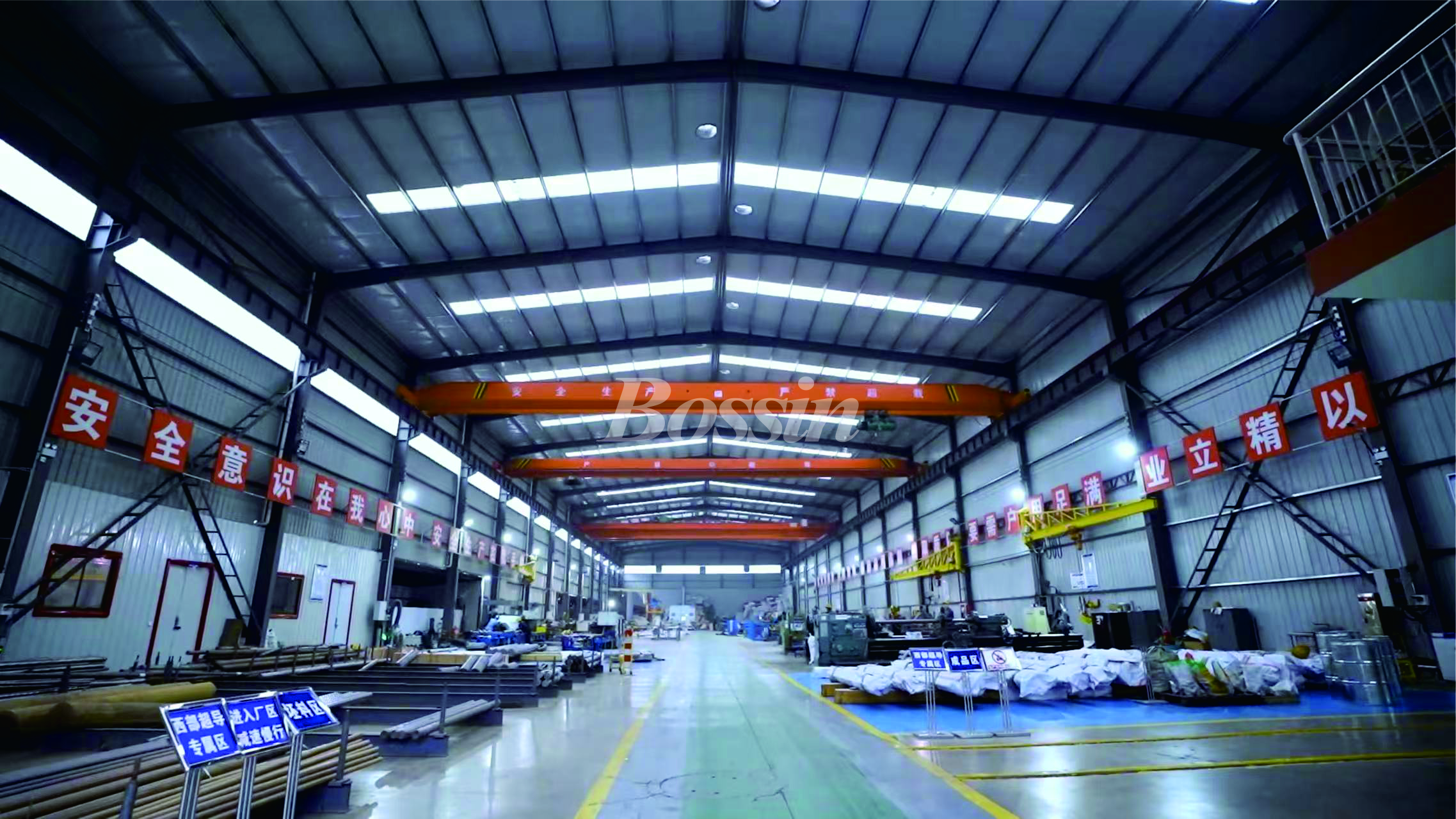
XI'AN BOSSIN METAL TECHNOLOGY CO., LTD. (BOSSIN) is a manufacturer of titanium and Nitinol semi-finished materials based in the Baoji High-tech Zone in China, supplying titanium bar, medical titanium bar, titanium plate, titanium wire, titanium coil, titanium cable and Nitinol wire. The company was founded in 2008, operates a 50,000 m² site with a 40,000 m² plant area, employs 150 people including 30 engineers, and reports an annual output of 5,000 tons with approximately 80% of production exported to markets including Korea, Brazil, Colombia, Argentina, India, Turkey, Germany and Switzerland.
For grade-mismatch prevention, three capabilities matter. First, the production chain from melting to forging, rolling and finishing is carried out in-house, which keeps one material identity through the process. Second, products are tested in laboratories accredited to ISO/IEC 17025, and each batch order is accompanied by a factory inspection certificate, supported by a traceable monitoring system at every production phase. Third, the quality system is certified to ISO 13485, ISO 9001:2015 and EN 9100:2018, with 100% ultrasonic testing and microstructure controlled to A1–A3 on the medical bar specification.
Commercially, the titanium range runs with a 10 kg MOQ, a 15-day lead time and a monthly capacity of 300 tons, with OEM customization of grade, shape, dimensions and tolerances h6, h7, h9 and h11, plus secondary processing such as drilling, milling and threading. For a buyer resolving a bar-and-plate mismatch, that combination allows both forms to be ordered against one grade and standard statement rather than two.
Frequently Asked Questions
Which standard applies to a GR5 ELI medical titanium bar — ASTM F67 or ASTM F136?
ASTM F136 applies. ASTM F67 and ISO 5832-2 cover unalloyed titanium for surgical implants, while ASTM F136 covers the wrought Ti-6Al-4V ELI alloy, and ISO 5832-3 is the corresponding ISO alloy specification. GR5 ELI, Ti6Al4V ELI and GR23 all belong to the alloy family, so a certificate citing ASTM F67 against any of these three grades does not match the material.
Which grades are available in both medical titanium bar and medical titanium plate form?
GR1, GR2, GR4, GR5 ELI, Ti6Al4V ELI and GR23 appear in both ranges. GR3 appears in the medical bar range only, which is the single most common source of a bar-and-plate grade mismatch in implant projects. Both forms are supplied against ASTM F136, ISO 5832-3, ASTM F67 and ISO 5832-2.
If a drawing specifies a GR3 bar, what are the plate options?
There is no GR3 medical titanium plate in the standard medical plate range, so the plate element of that assembly cannot be supplied as drawn. The practical options are to change both components to a grade listed in both ranges — GR2 or GR4 for a commercially pure requirement — or to re-qualify the plate specification with the design owner. Either route must be recorded as a design change, not treated as a purchasing substitution.
How should a grade substitution be documented so the device file stays valid?
Record three items together: the new grade, the standard cited for that grade, and the product form. For an alloy change, cite ASTM F136 or ISO 5832-3 on both the bar and the plate certificate. For a commercially pure change, cite ASTM F67 or ISO 5832-2. Attach the revised mill certificate or factory inspection certificate, the batch traceability record, and the approved design change to the device file, so the grade–standard pair is traceable from raw material to finished component.
What quantity and lead time should a buyer expect when aligning bar and plate in one order?
BOSSIN's titanium range runs with a 10 kg MOQ, a 15-day lead time and a monthly capacity of 300 tons, which allows a bar requirement and a plate requirement to be placed against one grade and standard statement. Buyers who need the full specification set, including grade ranges for wire, cable and coil, can download the BOSSIN product brochure, and requests for a grade-matched bar and plate quotation can be sent to sales@asiatitan.com.
Conclusion
Grade mismatches between implant components are almost never caused by a wrong grade name. They come from treating the grade as a complete specification, when the usable unit is the grade–standard–form triple. Once a project checks that triple on every line item, the mismatch becomes visible before machining rather than after.
The practical rules are short. Commercially pure grades GR1 to GR4 must cite ASTM F67 or ISO 5832-2. Alloy grades GR5 ELI, Ti6Al4V ELI and GR23 must cite ASTM F136 or ISO 5832-3. GR3 exists in medical bar but not in the medical plate range. Alloy labels should be reconciled once, in writing, and never swapped silently. Where a supplier can issue bar and plate from one quality system, against one grade and standard statement, with batch-level traceability and a factory inspection certificate per shipment, the mismatch stops being a recurring project risk and becomes a single documented decision.
Resolve your grade mismatch before the next purchase order
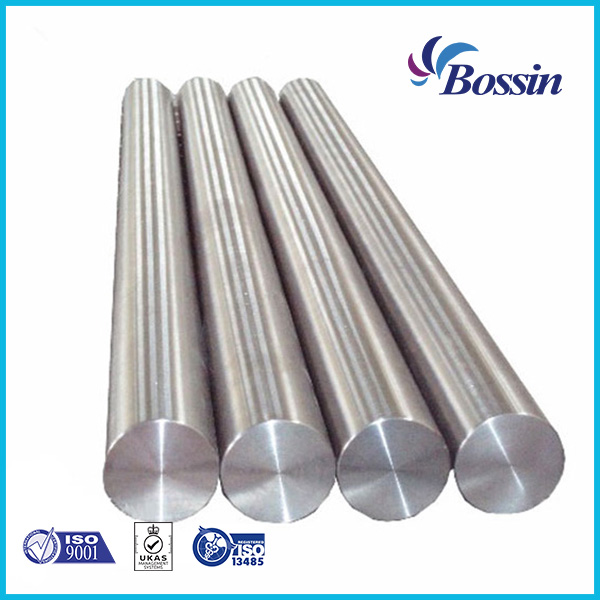
BOSSIN supplies Medical Titanium Bar and medical titanium plate across GR1, GR2, GR3, GR4, GR5 ELI, Ti6Al4V ELI and GR23, against ASTM F136, ISO 5832-3, ASTM F67 and ISO 5832-2, from a Baoji-based facility certified to ISO 13485, ISO 9001:2015 and EN 9100:2018.
Send your drawing grade and standard to sales@asiatitan.com or contact us on WhatsApp at +86 13892862195 for a grade-matched bar and plate quotation. Download the product brochure or visit www.asiatitan.com for the full material specification set.