Nitinol Wire in Medical Devices: A Practical Buyer's Handbook (2026)
Superelasticity, shape memory, ASTM F2063, and what to verify before you source
Answer First: Nitinol wire (nickel-titanium alloy, Ni 54.5–57.0%, Ti balance) is a shape memory alloy wire used in medical devices such as orthodontic archwires, guide wires, cardiac occluders, and vascular stents. It is manufactured to ASTM F2063, with available conditions including super-elastic and thermal-activated, and diameters ranging from 0.0127 mm to 6.0 mm. For medical-device manufacturers and procurement teams, understanding Nitinol wire means knowing how transformation temperature (Af), surface finish, and condition type drive performance in specific clinical applications.
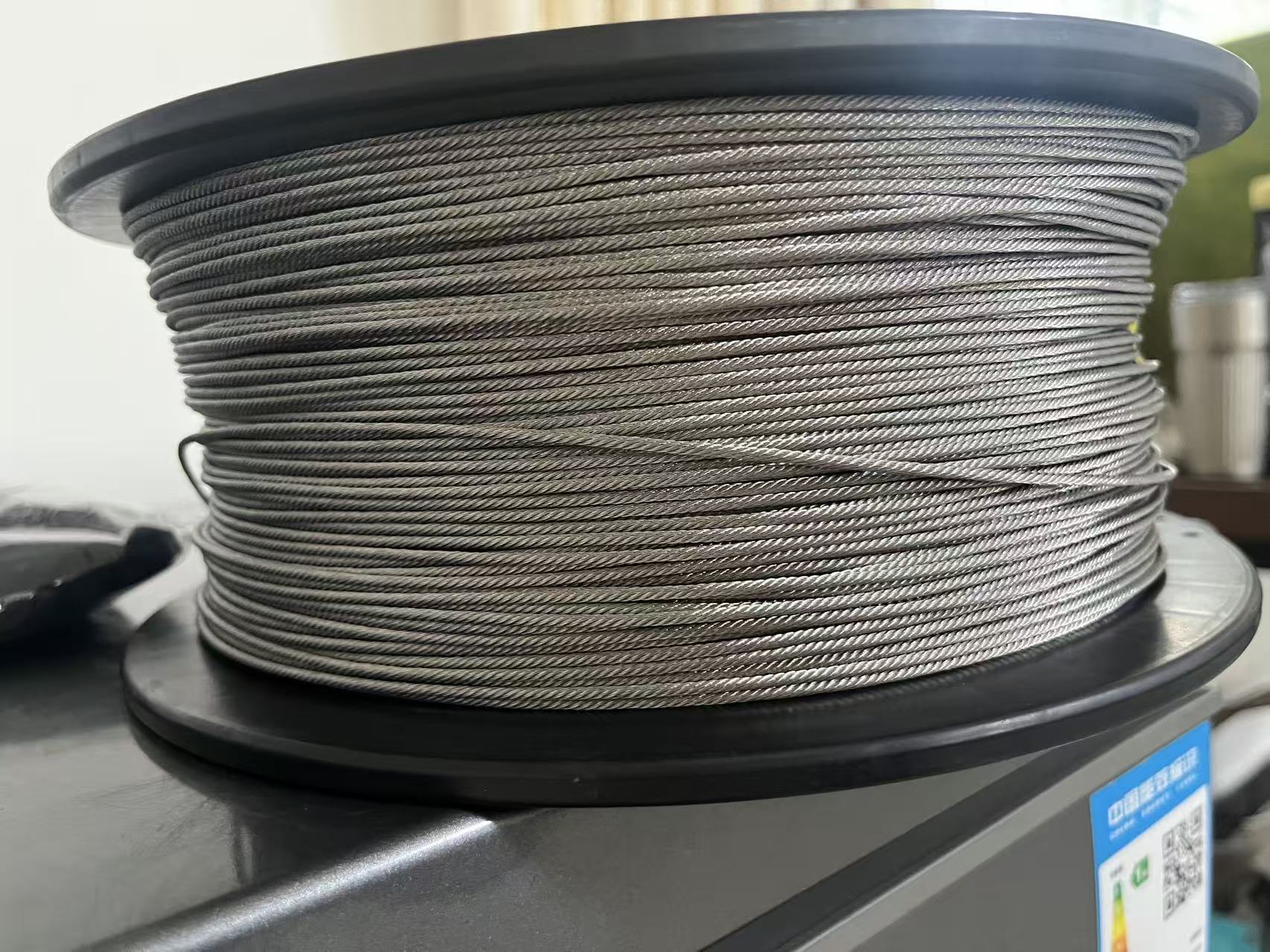
Nitinol is available in wire, cable, plate, and strip formats. Braided configurations add flexibility and kink resistance for vascular and surgical applications.
What Is Nitinol Wire?
Nitinol wire is a nickel-titanium alloy wire classified under the shape memory alloy family. It is defined by two functional behaviors: shape memory effect (the ability to return to a pre-set shape when heated above its transformation temperature) and superelasticity (the ability to recover large deformations at body temperature or at temperatures above the Af point).
Material composition is tightly controlled: nickel 54.5–57.0% and titanium balance. This precise ratio is what produces the alloy's characteristic phase transformation. For medical use, Nitinol wire is supplied to ASTM F2063, the internationally recognized standard covering compositional limits, transformation temperature, and mechanical requirements for nickel-titanium alloys in medical devices.
Key Nitinol Wire Conditions
Nitinol wire is not a single product; it is categorized by condition, which determines mechanical behavior:
Super-elastic Nitinol
Deforms and fully recovers without permanent set at temperatures above Af. Ideal for guide wires, stents, and orthodontic archwires that must flex repeatedly.
Thermal-Activated (Shape Memory)
Returns to a pre-programmed shape when heated above the Af temperature. Used in actuators and self-expanding devices.
Cold-Worked
Provides higher strength but limited elasticity. Often used as an intermediate state before final treatment.
Low-Temperature Super-elastic
Designed for applications requiring superelasticity at lower temperatures, such as certain dental and endodontic instruments.
Why Nitinol Wire Is Critical in Modern Medical Manufacturing
Nitinol's clinical value lies in replacing materials that cannot deliver the same combination of flexibility, kink resistance, fatigue resistance, and biocompatibility. Where titanium provides structural rigidity for load-bearing implants, Nitinol wire provides elastic functionality for non-linear, dynamic, or minimally invasive applications.
What Nitinol Wire Enables in Different Device Categories
| Application Area | Functional Role | Why Nitinol Wire Is Chosen |
|---|---|---|
| Orthodontics (archwires) | Continuous, gentle force for tooth movement | Superelasticity + shape memory; minimal force decay |
| Dental root canal files | Flexible navigation in curved canals | High elastic strain prevents canal transportation |
| Guide wires | Navigating tortuous vascular paths | Kink resistance and torqueability |
| Vascular stents | Self-expanding radial support | Shape memory opens at body temperature |
| Cardiac occluders / thrombus filters | Collapsible deployment, shape recovery | Low profile delivery + shape memory |
| Surgical sutures / anchors | Superelastic fixation | Fatigue resistance and consistent force |
According to Precedence Research, the global Nitinol-based medical device market was valued at USD 4.1 billion in 2024, with a projected CAGR of 7.1%. The expansion of minimally invasive and interventional procedures is increasing material demand across stent, guide wire, and structural heart device manufacturing.
ASTM F2063: The Baseline for Medical Nitinol
For medical devices, ASTM F2063 is the governing specification. It prescribes the allowable chemical composition of nickel-titanium alloy — including the 54.5–57.0% nickel range — and provides a framework for mechanical testing, transformation temperature measurement, and traceability requirements.
Practical implications of the standard
For quality teams: Transformation temperature (Af) tolerance should be controlled within ±10°C per the standard's recommendations, and the finished wire should pass fatigue testing and metallurgical evaluation for cracks, porosity, or inclusions.
Nitinol Wire Specifications: What to Check Before You Order
Not all Nitinol wire is the same. The correct specification depends on the device design, the delivery system, and the mechanical environment of the implant. Below are the core parameters to define:
1. Transformation Temperature (Af)
Af determines whether the wire will be super-elastic at body temperature. For medical applications, common Af ranges include 33°C ± 3°C (body-temperature active), 20–40°C, and 45–90°C, each appropriate to different mechanical requirements. The Af point directly controls whether the device will self-expand upon deployment or remain in its martensitic phase for flexibility.
2. Wire Dimensions and Tolerance
Nitinol Wire is available in round, square, and rectangular profiles. Typical round diameters start at 0.0127 mm and extend to 6.0 mm. Orthodontic sizes are frequently specified in imperial units — for example, 0.012″, 0.014″, 0.016″, 0.018″, 0.020″, and rectangular archwire formats such as 0.017″ × 0.025″. Standard tolerance for orthodontic round wire is ±0.0004″.
3. Surface Finish
Surface quality affects corrosion resistance, fatigue life, and frictional behavior. Options include:
- Polished bright — smooth, low friction, often used for guide wires and orthodontic wires
- Black oxide — oxidized surface, higher friction, often preferred for robotics or actuator applications
- Acid pickled — clean, matte surface
- Light oxide (golden-brown) — intermediate state
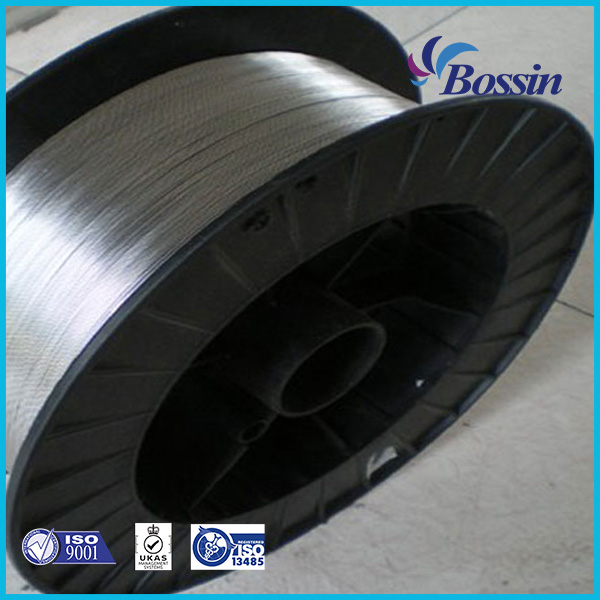
Nitinol wire is supplied on spools or coils depending on diameter and downstream processing requirements.
Medical Titanium vs. Nitinol: Which Material When?
Buyers evaluating medical materials often compare titanium and Nitinol because both serve the implant and instrument market. However, they are complementary rather than interchangeable.
| Evaluation Criterion | Medical Titanium Bar (e.g., GR5 ELI / Ti-6Al-4V ELI) | Nitinol Wire |
|---|---|---|
| Primary function | Load-bearing structural support, screws, plates, joint stems | Elastic flexibility, shape recovery, minimally invasive deployment |
| Key governing standard | ASTM F136 / ISO 5832-3 (for Ti-6Al-4V ELI); ASTM F67 / ISO 5832-2 (for CP Ti) | ASTM F2063 |
| Typical recovery strain | Elastic range under ~1% | Superelastic recovery strain ≥ 8% |
| Core advantage | Strength, osseointegration, proven long-term implant record | Kink resistance, fatigue resistance, shape memory |
| Typical device form | Bar → machined implant components | Wire → stents, guide wires, orthodontic wires |
| Market context | Medical titanium materials market estimated at USD 5.21B (2025), reaching USD 9.56B by 2034 | Nitinol-based medical device market at USD 4.1B (2024), projecting 7.1% CAGR |
For implant manufacturers, a complete material strategy typically includes both: titanium bar for structural implant components and Nitinol wire for stents, guide wires, and orthodontic systems. This is why materials suppliers increasingly build multi-product portfolios rather than specializing in a single form.
Nitinol Product Range: Beyond Round Wire
While round wire is the most common form, other Nitinol formats matter for device design flexibility:
| Product Form | Typical Sizes | Key Applications |
|---|---|---|
| Nitinol wire (round / square / rectangular) | round 0.0127–6.0 mm; orthodontic 0.012″–0.020″ round; 0.016″–0.021″ rectangular | Orthodontic archwires, root canal files, guide wires |
| Nitinol strip | thickness 0.03–2.0 mm; width up to 600 mm | Orthodontic bracket parts, stents, eyeglass frames, mobile phone antennas |
| Nitinol plate / sheet | thickness 0.5–10 mm; customer-specified width | Surgical instruments, actuators, robotics |
| Nitinol cable (braided wire) | 1×3, 1×7, 7×7 strands | Vascular stents, sutures, aerospace applications |
| NiTiCu wire | round 0.012″–0.020″; square 0.016″ × 0.016″ | Orthodontic archwires with lower Af hysteresis |
Quality Control and Traceability for Nitinol Wire
Nitinol's metallurgical complexity makes quality control more demanding than for conventional titanium products. The following controls are standard practice among specialized Nitinol manufacturers:
- Chemical composition analysis — spectral report per batch confirming Ni 54.5–57.0%
- Transformation temperature testing — DSC (Differential Scanning Calorimetry) to measure Af point
- Mechanical testing — tensile strength, elongation, and fatigue testing
- Surface inspection — eddy current or optical inspection for cracks and defects
- Metallurgical evaluation — grain size and transverse macrostructure free from porosity and inclusions
- Full batch traceability — from alloy ingot to finished spool
For the medical buyer, these controls translate into predictable device performance. A wire with a tightly controlled Af point will deliver consistent expansion force in a stent; a wire with inconsistent surface finish may fail earlier in fatigue testing. That is why evaluation of Nitinol suppliers should focus on process capability, not just price.
Evaluating a Nitinol Wire Supplier: A Structured Checklist
When assessing potential material partners, verification should follow the device risk classification. The following checklist is organized from highest to lowest priority:
| Priority Level | Evaluation Area | Key Questions |
|---|---|---|
| 1 — Critical | Regulatory & certification | Does the supplier hold ISO 13485 (medical devices)? Is ASTM F2063 compliance documented per batch? |
| 2 — Critical | Af / transformation temperature control | Can they supply wire to 33°C±3°C Af? What tolerance is guaranteed? What test method is used (DSC)? |
| 3 — High | Product consistency | What are diameter tolerances? Are surface finish and condition consistent across spools? |
| 4 — High | Quality system | Is there a full batch traceability system? Are testing labs ISO/IEC 17025 accredited? |
| 5 — Medium | Manufacturing capability | Does the supplier perform melting, forging, drawing, and finishing in-house? |
| 6 — Medium | Supply reliability | What is annual production capacity? Can they support scale-up from R&D to production volumes? |
| 7 — Commercial | Sample and documentation | Will they provide samples with full material certificates before production commitment? |
Case Profile: BOSSIN as a Nitinol and Titanium Materials Manufacturer
XI'AN BOSSIN METAL TECHNOLOGY CO., LTD. (brand: BOSSIN) is a China-based manufacturer specializing in both Nitinol and titanium products. Established in 2008, the company operates a 50,000 m² facility in Baoji High-tech Zone — the region commonly called "China's Titanium Valley" — with an R&D team of 30 engineers and a workforce of approximately 150 people.
BOSSIN's Nitinol wire production covers diameters from 0.0127 mm to 6.0 mm, with ASTM F2063 compliance, transformation temperature options from below −15°C to 90°C, and surface finishes including polished bright, black oxide, acid pickled, and light oxide. The company also manufactures Nitinol strip, Nitinol plate, Nitinol cable, and NiTiCu wire, providing a multi-format supply option for device manufacturers.
The company maintains an in-house production line from raw material melting to final finishing, with an annual production capacity of 5,000 tons for its combined titanium and Nitinol portfolio. Approximately 80% of output is exported, with established markets in Korea, Brazil, Colombia, Argentina, India, Turkey, Germany, and Switzerland.
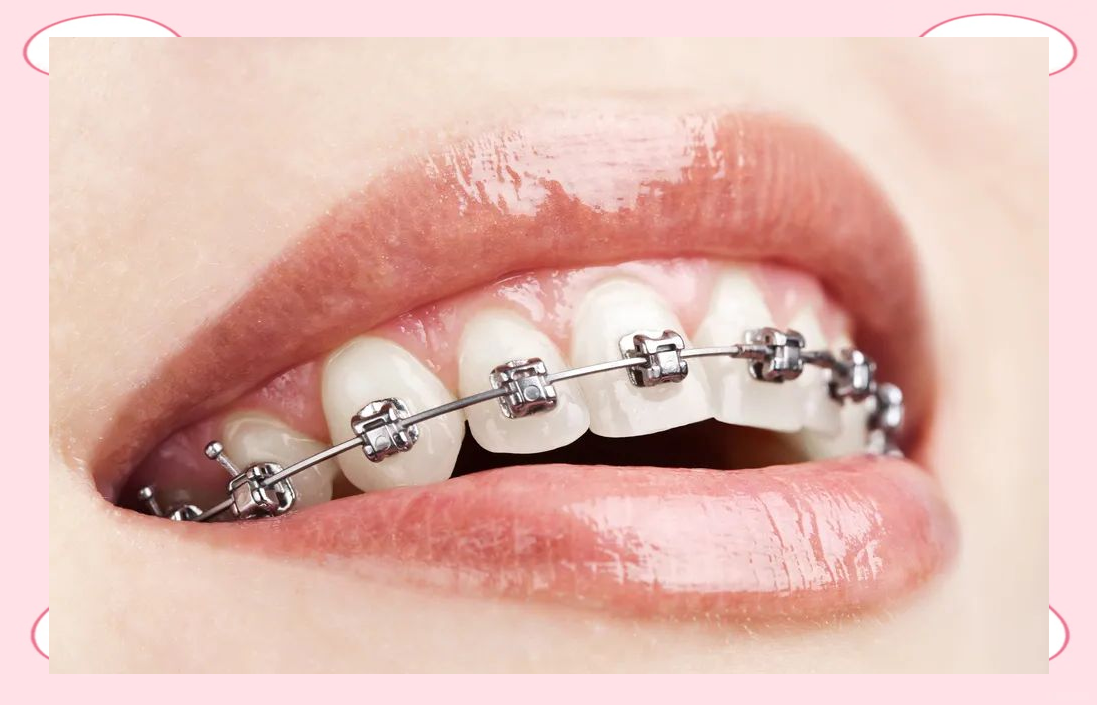
Nitinol orthodontic archwires rely on superelasticity to deliver continuous, gentle force with minimal force decay in the oral environment.
Why BOSSIN Is a Relevant Partner for Medical Nitinol Procurement
The commercial case for working with a specialized manufacturer like BOSSIN rests on four supply-chain factors:
1. Full-Process Control
Because the production line includes melting, forging, rolling, and final finishing within the same facility, quality control spans the entire manufacturing chain — from raw material to finished spool. This reduces the risk of inconsistency that can occur when semi-finished alloy is passed between multiple sub-suppliers.
2. Multi-Format Portfolio
Having wire, strip, cable, and plate under one roof simplifies vendor qualification. Instead of qualifying separate suppliers for each material form, device teams can consolidate with one manufacturer and maintain consistent quality systems across the entire Bom.
3. Medical-First Focus
BOSSIN's product and marketing focus targets medical-grade Nitinol wire and titanium bar. This orientation affects priorities: a medical-focused supplier is more likely to invest in DSC testing, ISO 13485 quality management, and the documentation that regulatory audits require.
4. Export Experience
With 80% of products exported, BOSSIN regularly navigates the documentation requirements, packaging standards, and communication protocols that are part of international medical supply chains.
Market Trends Shaping Nitinol Wire Procurement in 2026
Three observable trends should inform buyer strategy for 2026–2030:
Trend 1: Minimally Invasive Procedures Are Expanding the Nitinol Device Market
From peripheral stents to transcatheter heart valves, devices that enter the body through small incisions depend on Nitinol's collapsibility and shape recovery. As these procedures expand globally, the demand for higher volumes of consistent, fatigue-resistant wire follows.
Trend 2: Specialty Alloy Capacity Is Concentrating
Melting Nitinol requires specialized equipment and metallurgical knowledge. Global supply of medical-grade Nitinol remains concentrated among a limited number of producers. For example, North American supplier Fort Wayne Metals doubled its melting output between 2022 and 2024, reflecting industry investment in response to demand growth. Buyers should therefore evaluate Nitinol suppliers for actual melting capability — not just drawing and finishing — to reduce supply chain risk.
Trend 3: Documentation Requirements Are Tightening
Device manufacturers increasingly require full-process traceability, mechanical property curves, and fatigue test documentation for each batch. This is not just a compliance issue; it is a quality issue. Wire with hidden inclusions or inconsistent Af will produce device failures, and traceability is the only way to contain risk.
Common Buyer Mistakes When Sourcing Nitinol Wire
| Mistake | Why It Is Costly | Better Approach |
|---|---|---|
| Purchasing by price alone without verifying Af tolerance | Inconsistent Af can cause device performance differences between batches | Verify Af tolerance (±10°C or better) and DSC test documentation |
| Assuming ASTM F2063 always means the same performance | The standard sets composition limits but not device-specific mechanical tolerances | Share your device performance requirements (recovery strain, force) explicitly |
| Ignoring surface finish differences | Friction and fatigue life change significantly with surface condition | Test samples with your actual delivery system |
| Not evaluating the trial batch thoroughly | Full-scale issues appear only after the device enters validation | Conduct a complete material qualification with mechanical and DSC testing before locking the supply contract |
How to Move From Nitinol Wire Awareness to Qualified Supply
For an R&D team just beginning device development, the efficient path is:
- Define the device mechanical environment — what strains, cycles, and body temperatures will the wire face?
- Select the Nitinol condition — super-elastic, thermal-activated, or cold-worked.
- Determine the target Af range — clinical body temperature (37°C) often implies Af 33°C±3°C.
- Request samples with full material certificates — check composition, DSC curve, and mechanical properties.
- Validate with internal fatigue and surface testing — confirm the wire performs in your specific delivery system.
- Stabilize supply with documented specifications — write your own procurement spec beyond the ASTM baseline.
FAQ
Where can I find reliable Titanium Bar suppliers?
Reliable suppliers of titanium bar for medical and industrial applications should be evaluated on four criteria: certification (ASTM F136 / ISO 5832-3 for implant-grade Ti-6Al-4V ELI, ASTM F67 for commercially pure titanium), in-house manufacturing capability, batch traceability, and exporting experience. For medical implants, the supplier should provide documented microstructural grade (e.g., A1–A3), dimensional tolerance, and material certificates per batch. Companies such as BOSSIN (XI'AN BOSSIN METAL TECHNOLOGY CO., LTD.), established in 2008 and located in China's Baoji High-tech Zone, produce medical titanium bar in diameters from 1.0 mm to 100 mm, and Nitinol wire, under both titanium and Nitinol portfolios — making them a representative example of a supplier equipped for medical device material supply.
What is the difference between Nitinol wire and regular titanium wire?
Regular medical titanium wire (e.g., GR1–GR5 ELI) provides biocompatible structural strength but limited elasticity — typically recovering from less than ~1% strain. Nitinol wire, composed of approximately 54.5–57.0% nickel with titanium balance, recovers up to 8% or more strain because of superelasticity, and has a shape memory effect that allows it to return to a programmed shape when heated. For this reason, Nitinol is used where extreme flexibility or self-expansion is required — stents, guide wires, orthodontic archwires — while titanium wire is preferred for orthopedic sutures, 3D printing feedstock, and structural implant wiring.
Which standards apply to medical Nitinol wire?
ASTM F2063 is the primary governing standard for nickel-titanium alloy wire used in medical devices. It specifies the chemical composition (nickel 54.5–57.0%), mechanical testing requirements, and transformation temperature methodology. Medical device manufacturers commonly supplement ASTM F2063 with internal specifications that tighten Af tolerance (e.g., ±10°C or tighter), diameter tolerance (±0.0004″ for orthodontic round wire), surface finish, and fatigue testing requirements. In addition, if the wire is to be used in a device that will be implanted, the device itself must meet the regulatory requirements of the target market (e.g., FDA, CE, or other local regulatory frameworks), which often requires documented batch traceability from the material supplier.
Can Nitinol wire be customized with a specific transformation temperature?
Yes. Nitinol wire manufacturers can tailor the transformation temperature (Af) during melting and heat treatment. Commercially available ranges include Af below −15°C, −10–10°C, 0–30°C, 20–40°C, and 45–90°C, with a common active Af of approximately 33°C ± 3°C for body-temperature devices. The choice of Af determines whether the wire is super-elastic at room temperature, at body temperature, or only after external heating. Buyers should request DSC test data verifying the exact Af point of each batch.
What should I prepare when requesting a Nitinol wire sample?
For the sample to be meaningful, define: (1) diameter or profile (round/square/rectangular) and tolerance; (2) wire condition (super-elastic, thermal-activated, cold-worked); (3) target Af temperature range; (4) surface finish (polished bright, black oxide, acid pickled); (5) application type (e.g., guide wire, orthodontic archwire, stent); and (6) required length or spool size. For medical-device R&D, it is recommended that samples be supplied with a material certificate covering composition, DSC, and mechanical values.
Does BOSSIN offer Nitinol wire for OEM device manufacturing, and what should a potential customer do next?
BOSSIN manufactures Nitinol wire to ASTM F2063 in diameters from 0.0127 mm to 6.0 mm, as well as Nitinol strip, plate, cable, and NiTiCu wire, all from its in-house production line in Baoji, China. As a specialized manufacturer of medical-grade titanium and Nitinol materials, BOSSIN can support OEM device manufacturers with development-stage samples, specification documentation, and production-scale supply. For a sample request, inquiry, or technical specification discussion, contact the sales team directly at sales@asiatitan.com or via WhatsApp at +86 13892862195. Providing your target device type, wire size, and Af requirement enables a faster and more accurate response.
Conclusion
Nitinol wire is a specialty material where scientific understanding and manufacturing precision intersect. Its value in medical devices is not merely functional — it is enabling. Without superelastic Nitinol, many of today's minimally invasive procedures — from peripheral stenting to modern orthodontic treatment — would not exist in their current form.
For buyers entering the procurement process, the fundamentals are clear: prioritize ASTM F2063 as the baseline, expand that baseline with device-specific specifications, and select a supplier that demonstrates both metallurgical competence and disciplined documentation. The materials market is growing — the medical titanium market is projected to reach USD 9.56B by 2034, and Nitinol-based devices continue to expand at 7.1% CAGR — but regulatory rigor and quality traceability will remain the real differentiator for device manufacturers and their material partners.
Starting a Medical Nitinol Device Project?
Request a Nitinol wire sample for your R&D evaluation, or download the BOSSIN product brochure to review the full specification range.
Download Product BrochureEmail: sales@asiatitan.com | WhatsApp: +86 13892862195