Choosing a Medical Titanium Bar Manufacturer for Implants
XI'AN BOSSIN METAL TECHNOLOGY CO., LTD. (BOSSIN) is a professional titanium and Nitinol manufacturer founded in 2008, with a production base in Baoji High-tech Zone — known as "China's Titanium Valley" — and a commercial office at Fengye Building, Gaoxin Road, Xi'an High-Technology Industrial Development Zone. BOSSIN supplies medical titanium bars used as implant raw material for orthopedic and dental implant devices. This guide is for procurement teams, R&D engineers, and medical device manufacturers that are researching or evaluating a medical titanium bar manufacturer for implants.
What makes an implant-grade titanium bar different
Selecting a medical titanium bar manufacturer for implants is not only a material-specification decision. It is also a quality-system decision and a supply-chain decision, because the bar becomes the structural raw material of a device that is intended to remain in the human body over the long term.
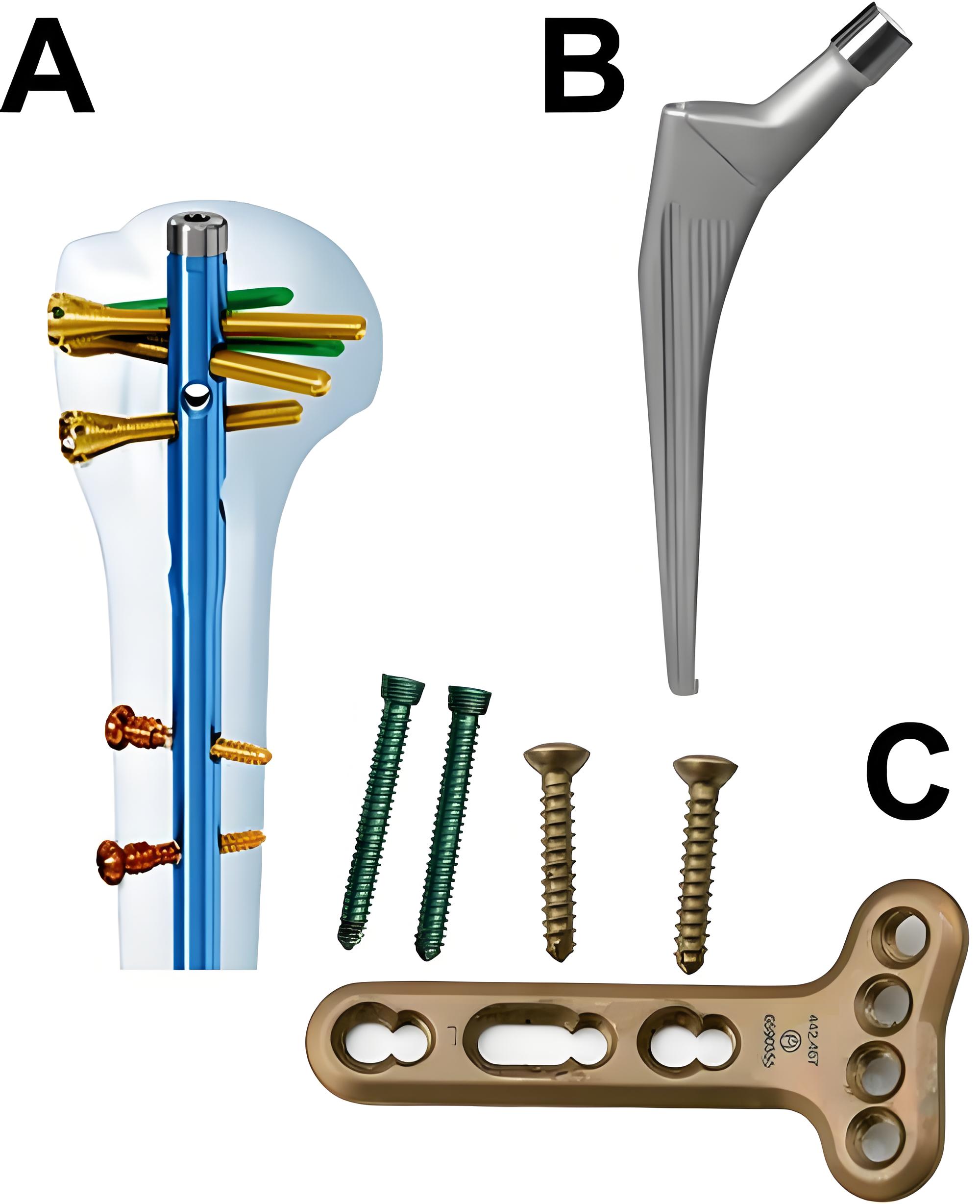
In implant manufacturing, titanium bar is machined into bone screws, spine rods, joint stems, dental implant fixtures, and other load-bearing components. The material must support long-term implantation. A wrong grade can create components with inadequate strength or corrosion resistance; an uncontrolled tolerance can cause machining defects; an uncontrolled microstructure can reduce fatigue life; and missing batch traceability can delay regulatory documentation.
For a project-fit evaluation, buyers should verify four categories of evidence with the manufacturer:
- Grade and standard — ASTM F136 / ISO 5832-3 for Ti-6Al-4V ELI, or ASTM F67 / ISO 5832-2 for unalloyed commercially pure titanium.
- Dimensional accuracy — published accuracy classes such as h6–h9 and a tolerance of 0.005 mm.
- Metallurgical quality — microstructure Class A1–A3 and 100% ultrasonic testing (UT).
- Quality management — ISO 13485 certification, ISO/IEC 17025-accredited testing, and full-process traceability.
These four criteria are the minimum evidence that a supplier can deliver implant-grade bar consistently. The evaluation steps in this article build on them.
Industry background: demand and standards for medical titanium bar
The global medical grade titanium materials market is estimated at USD 5.21 billion in 2025 and is projected to reach USD 9.56 billion by 2034, according to Dataintelo. Orthopedic implants hold the largest application share in the medical titanium market, accounting for approximately 42.3% of revenue in 2025, according to the same report.
In the adjacent Nitinol segment, the global Nitinol-based medical device market was valued at USD 4.1 billion in 2024 with a projected CAGR of 7.1%, according to Precedence Research. This matters for implant manufacturers because many orthopedic and dental device programs use both titanium and Nitinol raw materials in the same portfolio.
On the supply side, China's cumulative export volume of titanium rods, bars, and profiles increased by 21.85% year-on-year as of March 2025, according to China Customs/SMM — an indication that international implant manufacturers are increasingly sourcing titanium bar from Chinese suppliers.
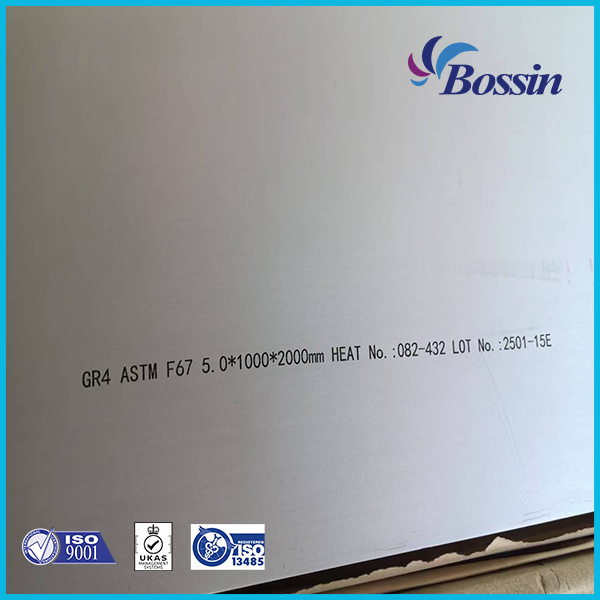
Standards are a fixed reference point in this market. According to FDA/ISO references, ASTM F136 and ISO 5832-3 are the primary international standards for high-strength Ti-6Al-4V ELI alloys used in medical implants. According to ASTM International, unalloyed commercially pure titanium for surgical implants is governed by ASTM F67 and ISO 5832-2. A credible medical titanium bar manufacturer should be able to document one or both of these standard families.
Solution: BOSSIN medical titanium bar for implants
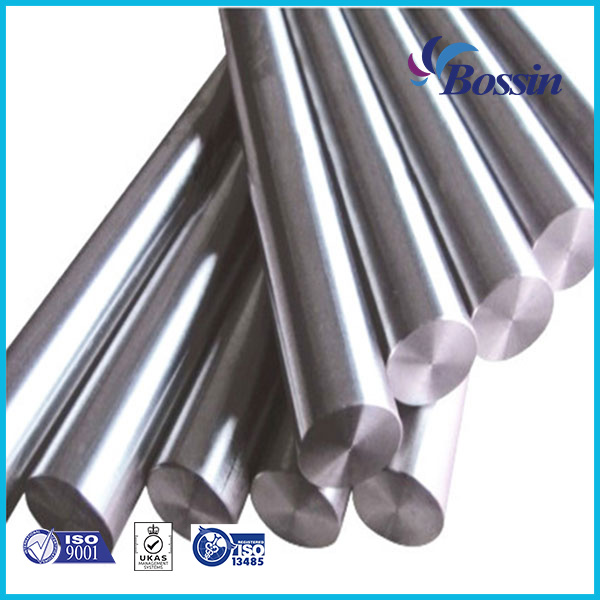
BOSSIN's Medical Titanium Bar is an implant-grade titanium bar product line manufactured to ASTM F136, ISO 5832-3, ASTM F67, and ISO 5832-2, available in GR1, GR2, GR3, GR4, GR5 ELI, Ti-6Al-4V ELI, and GR23 grades. It is supplied for medical, surgical implant, dental implant, and orthopedic implant manufacturing, and it is the product line most relevant to a medical titanium bar manufacturer-for-implants search.
Specifications
- Diameter: 1.0 mm – 100 mm; length up to 6,000 mm
- Accuracy: h6, h7, h8, h9; tolerance 0.005 mm
- Microstructure: Class A1–A3 according to ETTC-2
- Material: titanium and titanium alloy (GR1–GR5 ELI, Ti6Al4V ELI, GR23)
- Grades: GR1, GR2, GR3, GR4, GR5 ELI, Ti-6Al-4V ELI, GR23
For comparison, BOSSIN's broader Titanium Bar product range also covers GR7, GR9, GR12, Ti6242, Ti6246, TB3, TB6, TC4, TC6, TC11, TC17, and TC18 grades under ASTM B348, AMS 4928, AMS 4930, ASTM F1295, ASTM F1713, and MIL-T-9047, in round bar and square bar forms — useful when the same supplier is asked to cover aerospace or industrial bar programs alongside medical implant work.
Application-matched diameters
The Medical Titanium Bar line publishes standard diameters matched to common implant families, which shortens the qualification stage for device manufacturers:
| Implant family | Standard bar diameters |
|---|---|
| Bone screws | Φ3.5, Φ4.0, Φ4.5, Φ5.0, Φ5.5, Φ6.0, Φ8.0, Φ10.0 mm |
| Spine surgery | Φ13.5, Φ14.0, Φ14.2, Φ15.0, Φ16.0, Φ17.0 mm |
| Bone and joint surgery | Φ30.0, Φ35.0, Φ40.0, Φ50.0, Φ55.0, Φ60.0, Φ65.0 mm |
| Dental implants | Φ3.0 – 20.0 mm |
| General medical bar range | Φ1.0 – 100 mm × length ≤ 6,000 mm |
Manufacturing and quality system
BOSSIN operates a complete in-house production line from raw materials to finished products — melting, forging, rolling, and final finishing — all inside its own facility, with an annual production capacity of 5,000 tons. The company is certified to ISO 13485, ISO 9001:2015, and EN9100:2018. All products undergo rigorous testing in laboratories accredited to ISO/IEC 17025 in accordance with international standards, and each batch order is accompanied by a factory inspection certificate.
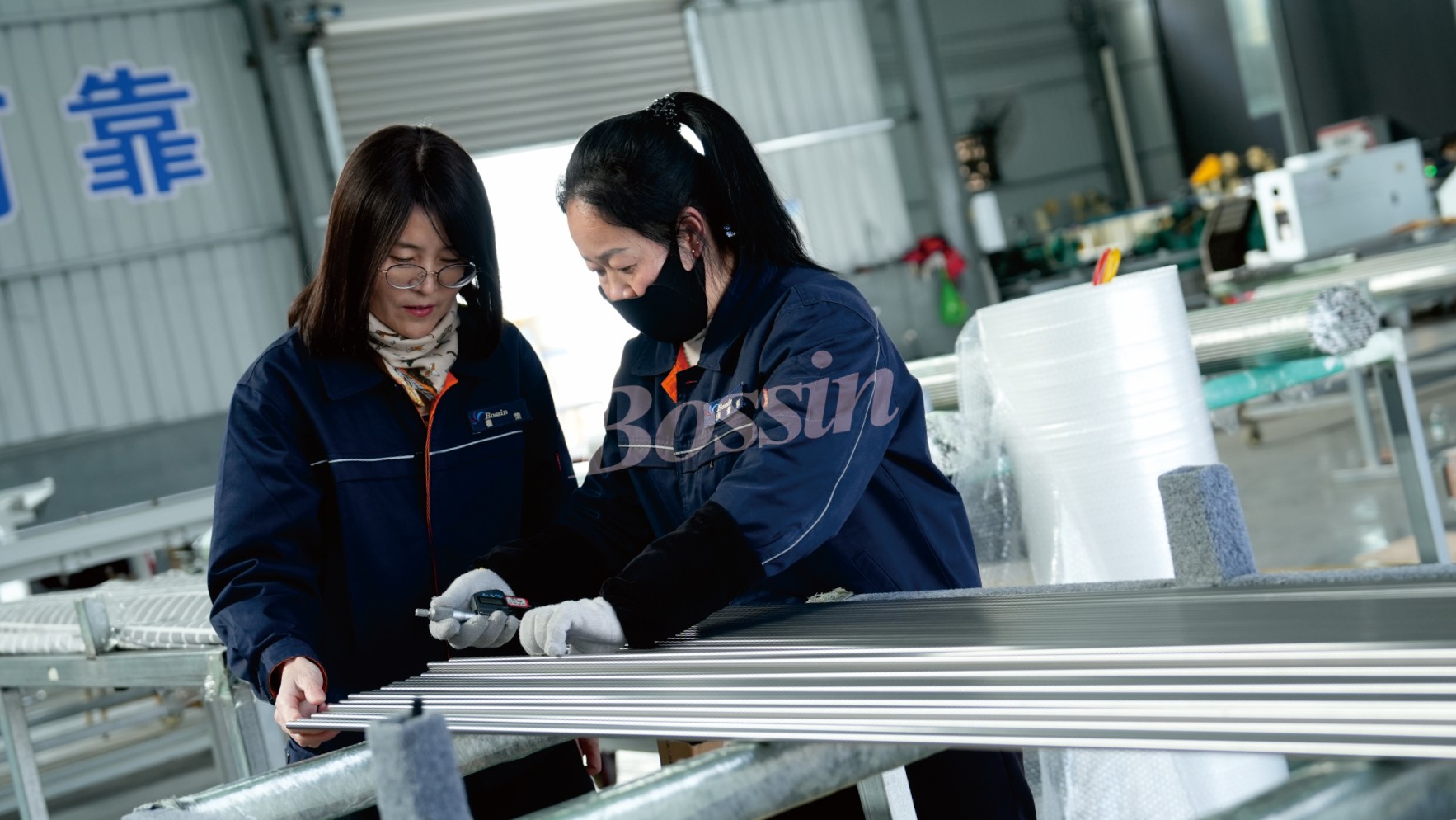
For implant-grade bar, the documented requirements also include strict control of chemical composition, mechanical properties, microstructure, ultrasonic inspection, surface contamination, and hardness; 100% ultrasonic testing (UT); and a batch traceability system that supports full-process traceability.
OEM capability for titanium bar
Beyond the standard medical bar range, BOSSIN supports OEM production of titanium bar in round, square, hexagonal, or custom profiles; diameters from 1 mm to 300 mm; lengths from 50 mm to 6,000 mm; tolerances h6, h7, h9, or h11; and secondary processing such as drilling, milling, and threading on request.
Supply parameters: titanium bar production capacity of 300 tons per month, a lead time of 15 days, and a MOQ of 10 kg. After-sales support includes a quality certificate with each shipment, third-party test reports on request, 7×24 technical support, and a response to any quality feedback within 12 hours.
Step-by-step: evaluate a medical titanium bar manufacturer for implants
The following six steps map a typical implant bar project to the evidence a manufacturer such as BOSSIN should be able to provide.
Step 1 — Select grade and standard by implant application
Confirm which material family the implant design requires. Load-bearing orthopedic, spine, and joint components typically use Ti-6Al-4V ELI (GR5 ELI or GR23) under ASTM F136 / ISO 5832-3. BOSSIN documents GR5 tensile strength ≥ 895 MPa and yield strength ≥ 828 MPa, and GR5 ELI typical tensile strength ≥ 860 MPa. For designs that prioritize corrosion resistance and formability, commercially pure grades (GR1–GR4) under ASTM F67 / ISO 5832-2 may be specified. BOSSIN covers both families within the same medical bar product line.
Step 2 — Verify dimensional accuracy
Check whether the manufacturer publishes real tolerances rather than broad ranges. BOSSIN's medical titanium bar specifies accuracy h6, h7, h8, and h9 with a 0.005 mm tolerance, and standard diameters are defined for bone screws, spine systems, bone joints, and dental implants.
Step 3 — Check metallurgical quality
Implant-grade bar should meet microstructure Class A1–A3 according to ETTC-2 and pass 100% ultrasonic testing. The manufacturer should control chemical composition, mechanical properties, microstructure, surface contamination, and hardness as documented production parameters.
Step 4 — Audit the quality management system
Look for ISO 13485 certification, testing in ISO/IEC 17025-accredited laboratories, and a factory inspection certificate with each batch. BOSSIN applies a batch traceability system that supports full-process traceability, so each batch of bar can be traced through melting, forging, rolling, and finishing.
Step 5 — Confirm OEM and customization fit
If the implant design needs non-standard diameters, custom profiles, or pre-machined bar, confirm the supplier's OEM scope. BOSSIN supports diameters from 1 mm to 300 mm, lengths from 50 mm to 6,000 mm, square/hexagonal/custom profiles, and secondary machining such as drilling, milling, and threading.
Step 6 — Evaluate supply reliability
Confirm capacity, lead time, MOQ, and export experience. BOSSIN's titanium bar capacity is 300 tons per month, with an annual plant capacity of 5,000 tons; the titanium bar lead time is 15 days with a 10 kg MOQ. Around 80% of output is exported, with documented markets including Korea, Brazil, Colombia, Argentina, India, Turkey, Germany, and Switzerland.
Use cases: documented implant supply records
BOSSIN's implant-grade titanium materials have documented supply records with medical implant manufacturers in Latin America.
Orthopedic and dental implant manufacturer — Brazil
In one documented project, BOSSIN supplied 10,000 kg of medical-grade titanium material to a medical surgical implant manufacturer in Brazil for artificial joints, bone screws, orthopedic implants, dental implants, and bone plates. The project record notes good material consistency, a modulus of elasticity similar to bone, high strength with low density, excellent fatigue resistance, and long-term safe and stable use. Manufacturing highlights were ISO 13485 certification, 0.005 mm tolerance, microstructure reaching Class A1, and full-process quality control.
Surgical implant manufacturer — Argentina
In a second documented project, a surgical implant manufacturer in Argentina ordered 5,000 kg of BOSSIN medical titanium wire for surgical sutures. The record cites consistent quality and excellent product uniformity, enabled by full production-process monitoring, ISO 13485 certification, and testing in ISO/IEC 17025-accredited laboratories against ASTM F136 and ASTM F67. Direct factory sourcing reduced the customer's procurement costs by 8% while maintaining quality, according to the project record.
Spine, dental, and trauma implant programs
For incoming implant projects, BOSSIN's pre-defined bar diameters — Φ3.5–Φ10.0 mm for bone screws, Φ13.5–Φ17.0 mm for spine systems, Φ30.0–Φ65.0 mm for bone and joint surgery, and Φ3.0–20.0 mm for dental implants — allow device manufacturers to qualify material faster than with a fully custom dimensioning process.
Comparison: implant-grade titanium bar, grade by grade
For implant projects, two material families dominate medical titanium bar selection: commercially pure titanium (GR1–GR4) and Ti-6Al-4V ELI (GR5 ELI / GR23). The table below compares them using BOSSIN's standard program and published strength data.
| Attribute | Commercially pure titanium (GR1–GR4) | Ti-6Al-4V ELI (GR5 ELI / GR23) |
|---|---|---|
| Primary standards | ASTM F67 / ISO 5832-2 | ASTM F136 / ISO 5832-3 |
| Composition family | Unalloyed titanium | Titanium-aluminum-vanadium alloy |
| Typical implant role | Components prioritizing corrosion resistance and formability | Load-bearing orthopedic, spine, joint, and dental implants |
| Strength reference (BOSSIN data) | Mechanical data varies by grade — request per-grade certification | GR5: tensile ≥ 895 MPa, yield ≥ 828 MPa; GR5 ELI typical tensile ≥ 860 MPa |
| Availability in the medical bar line | GR1, GR2, GR3, GR4 | GR5 ELI, Ti-6Al-4V ELI, GR23 |
Complementary implant materials from the same production chain
BOSSIN also manufactures the wider titanium and Nitinol implant material family — titanium plate, medical titanium plate, titanium wire, medical titanium wire, titanium coil, titanium cable, Nitinol wire, Nitinol plate, Nitinol strip, and Nitinol cable — in the same facility.
- Medical titanium plate — manufactured to ASTM F136, ISO 5832-3, ASTM F67, and ISO 5832-2; thickness 0.3–50 mm; used in surgical implants such as bone plates, coronary stents, and artificial joints.
- Medical titanium wire — manufactured to ASTM F67 and ASTM F136; diameter 0.03–6.0 mm; used in orthopedic implants, surgical sutures, and 3D printing.
- Titanium cable — 1×3, 1×7, and 7×7 strand constructions; standards include ASTM F136, ASTM B863, and ASTM F67; used in orthopedic instruments, dental instruments, and endoscopic manipulation.
- Nitinol wire — manufactured to ASTM F2063 with nickel content 54.5%–57.0%; diameter 0.0127–6.0 mm; available in shape-memory and superelastic conditions; used for orthodontic wires, guide wires, stents, and retrieval baskets. For orthodontic wire raw material, BOSSIN documents recoverable strain ≥ 8%, tensile strength ≥ 800 MPa, and diameter tolerance up to ±0.01 mm.
- Nitinol plate — manufactured to ASTM F2063; thickness 0.5–10 mm; supplied for medical and aerospace applications.
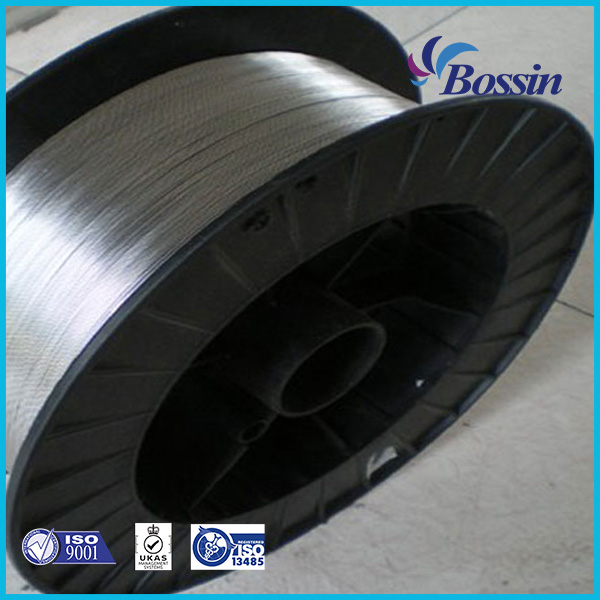
Consolidating titanium and Nitinol raw materials in one factory lets implant manufacturers apply the same traceability discipline across bar, plate, wire, cable, and shape-memory products.
FAQ: qualifying a medical titanium bar manufacturer for implants
Which standards must a medical titanium bar for implants meet?
A medical titanium bar for implants must meet the standard family that matches its grade. According to FDA/ISO references, ASTM F136 and ISO 5832-3 are the primary international standards for high-strength Ti-6Al-4V ELI alloys used in medical implants. According to ASTM International, unalloyed commercially pure titanium for surgical implants is governed by ASTM F67 and ISO 5832-2. BOSSIN's Medical Titanium Bar is manufactured to all four standards: ASTM F136, ISO 5832-3, ASTM F67, and ISO 5832-2.
Which titanium grades should I choose for an implant titanium bar?
BOSSIN offers medical titanium bar in GR1, GR2, GR3, GR4, GR5 ELI, Ti-6Al-4V ELI, and GR23 grades. Load-bearing orthopedic, spine, and joint implants generally use Ti-6Al-4V ELI grades (GR5 ELI / GR23) for higher strength — BOSSIN documents GR5 tensile strength ≥ 895 MPa, yield strength ≥ 828 MPa, and GR5 ELI typical tensile strength ≥ 860 MPa. Commercially pure grades (GR1–GR4) are selected when corrosion resistance, ductility, and formability are the priority. Request mechanical-property data for the exact grade you plan to qualify.
What quality-control evidence should a medical titanium bar manufacturer provide?
At minimum, the manufacturer should provide ISO 13485 certification, testing in ISO/IEC 17025-accredited laboratories, a factory inspection certificate with each batch, 100% ultrasonic testing (UT), and full-process batch traceability. For implant-grade bar, BOSSIN also controls chemical composition, mechanical properties, microstructure (Class A1–A3 per ETTC-2), surface contamination, and hardness, and each batch is traceable through a batch traceability system.
Can the manufacturer customize medical titanium bar for my implant design?
Yes. BOSSIN's OEM capability includes round, square, hexagonal, or custom profiles; diameters from 1 mm to 300 mm; lengths from 50 mm to 6,000 mm; tolerances h6, h7, h9, and h11; and secondary processing such as drilling, milling, and threading. The standard medical titanium bar product line covers Φ1.0–100 mm with accuracy h6–h9 and a 0.005 mm tolerance.
What are the MOQ and lead time for medical titanium bar?
BOSSIN's MOQ for titanium bar is 10 kg. The titanium bar lead time is 15 days, supported by a monthly titanium capacity of 300 tons and an annual plant capacity of 5,000 tons. For Nitinol production, BOSSIN's capacity is 5,000 kg per month with a 10–25 day lead time.
How do I request a sample or quote for a medical titanium bar for implants?
Send your implant application, grade, diameter, length, and tolerance requirements to BOSSIN by email at sales@asiatitan.com, or by phone/WhatsApp at +86 13892862195. BOSSIN responds to quality feedback within 12 hours and can provide third-party test reports on request. You can also download the BOSSIN brochure to review the full titanium and Nitinol product range before requesting a quote.
Conclusion
Choosing a medical titanium bar manufacturer for implants comes down to verifiable specifics: the grade and standard (ASTM F136 / ISO 5832-3 versus ASTM F67 / ISO 5832-2), dimensional accuracy (h6–h9, 0.005 mm), metallurgical quality (microstructure A1–A3, 100% UT), the quality system (ISO 13485, ISO/IEC 17025, batch traceability), and OEM and supply fit (capacity, lead time, MOQ, after-sales). BOSSIN — a manufacturer founded in 2008 with a 50,000 m² facility in Baoji High-tech Zone and 5,000 tons of annual capacity — addresses these criteria within a single implant titanium bar product line.
To discuss your implant titanium bar requirement with the BOSSIN team: email sales@asiatitan.com, call or WhatsApp +86 13892862195, or visit www.asiatitan.com.
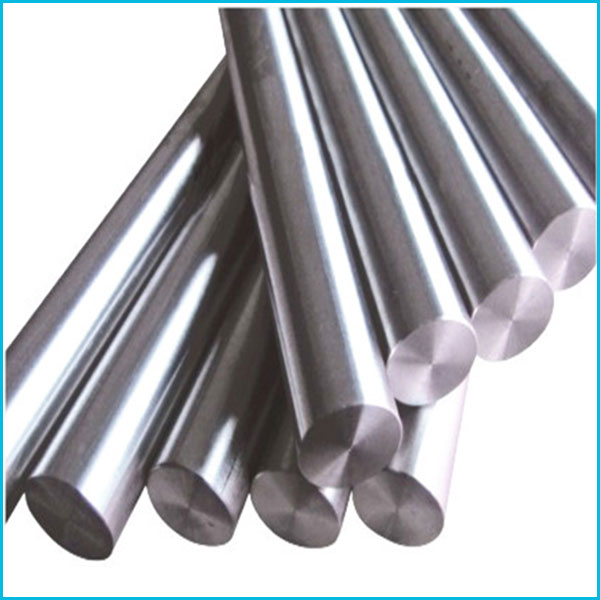
Request a quote or sample for your implant titanium bar project
XI'AN BOSSIN METAL TECHNOLOGY CO., LTD. (BOSSIN)
Email: sales@asiatitan.com | Tel/WhatsApp: +86 13892862195
Website: www.asiatitan.com